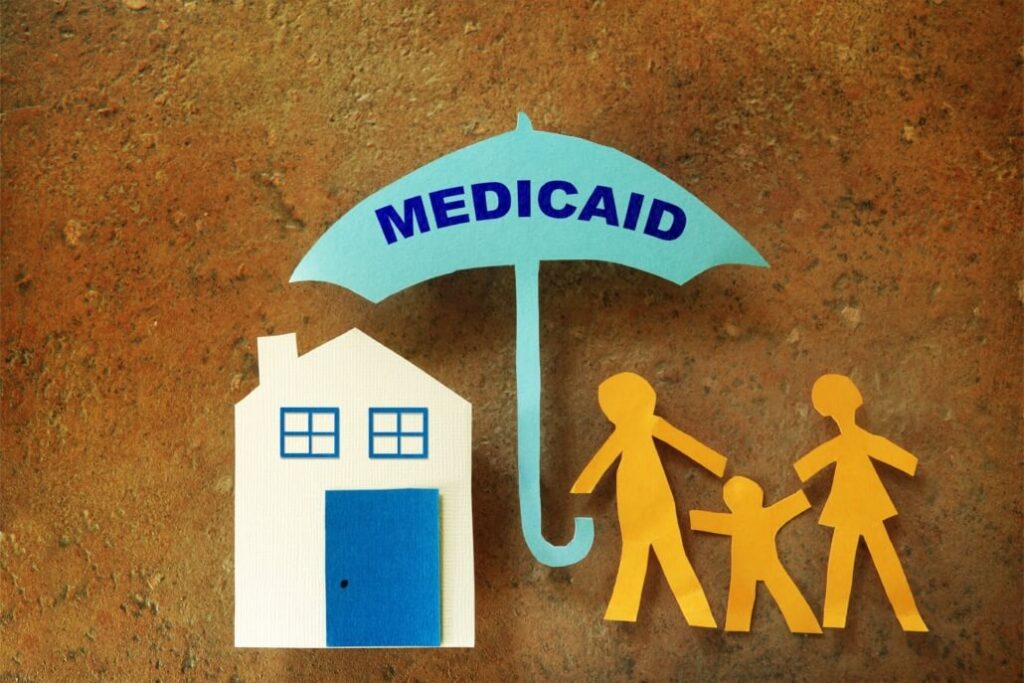

For more than two decades, the Children’s Health Insurance Program (CHIP) has provided health coverage to children in families with low to moderate incomes. Each state has the option to cover its CHIP population within its Medicaid program, design and structure a separate CHIP program, or establish a combination program using both options.
CHIP is currently funded through federal fiscal year (FFY) 2027 (Sept. 30, 2027) by the HEALTHY KIDS and ACCESS Acts. The Acts also extended the maintenance of effort (MOE) provision, which requires states to maintain eligibility standards that were in place in 2010 through FFY 2027. However, beginning in FFY 2020 MOE only applies to children in families with incomes at or below 300 percent of the federal poverty level (FPL).[1]
Eligibility
Modified adjusted gross income (MAGI) eligibility levels for CHIP/Title XXI in Utah (by age)
| Ages 0 – 1 | Ages 1 – 5 | Ages 6 – 18 | |
| Medicaid expansion | N/A | N/A | 105 – 133% FPL |
| Separate CHIP | 140 – 200% FPL | 140 – 200% FPL | 134 – 200% FPL |
Source: Medicaid and CHIP Payment and Access Commission (MACPAC), MACStats: Medicaid and CHIP Data Book, December 2018, Exhibit 35: “Medicaid and CHIP Income Eligibility Levels as a Percentage of the Federal Poverty Level for Children and Pregnant Women by State, April 2018.” Note: Eligibility levels do not include the mandatory 5% income disregard.
Coverage for Pregnant Women
Using CHIP funding, states can opt to provide coverage for pregnant women and/or services through the “unborn child” coverage option. Utah does not provide coverage for pregnant women through CHIP.
Benefit Package
States that operate Medicaid expansion CHIP programs must follow Medicaid rules, providing all Medicaid-covered benefits to enrolled children, including the Early and Periodic Screening, Diagnostic, and Treatment (EPSDT) services benefit. In separate CHIP programs, states have substantial flexibility in designing CHIP benefit packages within broad federal guidelines.
Delivery System
Utah’s CHIP program utilizes a managed care delivery system, and does not have a fee-for-service arrangement.
Premiums and Cost Sharing
Within federal parameters, states can set CHIP program premium and cost sharing levels. In total, any family contribution to the cost of coverage cannot exceed 5 percent of family income annually.

Key Highlights:
Program type: Utah operates a combination CHIP program called CHIP.
Number of children covered: In FFY 2018, 60,423 children were covered by CHIP. (Data from CHIP Annual Report Template System)
State’s enhanced federal match rate*: For FFY 2020, the federal match is 89.23 percent.
Participation rate: In 2017, 84.9 percent of eligible children in Utah participated in either Medicaid or CHIP. (Urban Institute)
*The Affordable Care Act increased the federal CHIP match rate by 23 percentage points. The HEALTHY KIDS and ACCESS Acts maintained this increase through FFY 2019, and reduced it to 11.5 percentage points in FFY 2020. The federal CHIP match rate returns to states’ regular enhanced match rate in FFY 2021 and beyond.
Premiums and selected cost sharing in Utah’s CHIP program, 2019
| Family Income Level | Premiums | Office Visits | Inpatient Services | Prescription Drugs |
| 134-150% FPL | $30/family per quarter | $5 | $150 after deductible | $5 and 5% of approved amount |
| 151-200% FPL | $75/family per quarter | $25-$40 | 20% of approved amount after deductible | $15 and 25-50% of approved amount |
Strategies to Simplify Enrollment and Renewals in Utah
| Strategy | Used |
| Use of presumptive eligibility | No |
| Use of 12-month continuous eligibility | Yes |
| Use of express lane eligibility | No |
| Premium assistance | Yes |
For definitions of strategies in this chart, see the Centers for Medicare & Medicaid Services December 2009 State Health Official letter here.
Other Characteristics of Utah’s CHIP Program
| Does Utah… | |
| Require a waiting period?[2] | Yes, 3 months |
| Offer a buy-in option?[3] | No |
| Cover dependents of public employees? | No |
| Cover lawfully residing children without a five-year waiting period? | Yes |
Source: Medicaid and CHIP Eligibility, Enrollment, and Cost Sharing Policies as of January 2019: Findings from a 50-State Survey. Kaiser Family Foundation and Georgetown University Center for Children and Families.
Health Services Initiatives
States can develop Health Services Initiatives (HSIs) to improve the health of low-income children and youth by using a portion of their existing CHIP administrative dollars. After covering regular CHIP program administrative costs, states can use any remaining funds – within the 10 percent cap – for an HSI project. The federal share of the HSI project cost is funded at the state’s CHIP match rate. States have used HSIs to support poison control centers, school health services, lead abatement efforts, and other unique prevention and intervention projects. Utah currently does not have an HSI.
Quality Measures
States may report on a core set of quality measures for children. Utah reported on 16 measures for federal fiscal year 2018. Among the measures is access to primary care providers, listed below.
Percentage of children and adolescents visiting a primary care provider, by age (FFY 2018)
| 12 – 24 months | 25 months – 6 years | 7 – 11 years | 12 – 19 years | |
| Utah | 98.7% | 89.2% | 89.3% | 90.5% |
Source: Department of Health and Human Services, 2019 Annual Reporting on the Quality of Care for Children in Medicaid and CHIP, September 2019. The measure is for the percentage of children ages 12 to 24 months and 25 months to 6 years who visited a primary care provider within the past year; and every two years for children ages 7 to 11 years and 12 to 19 years. Note: This includes CHIP data only.
[1] The information in this fact sheet was not reviewed by the state.
[2] States may implement waiting periods up to 90 days in CHIP. A waiting period is the length of time a child must be uninsured before enrollment in CHIP.
[3] States can allow families with incomes above the upper income eligibility limit to pay the full cost to purchase coverage for their uninsured children through CHIP.